
Cottonmouth (water moccasin)
Agkistrodon piscivorus Pit viper
The cottonmouth, also called the water moccasin, is a heavy-bodied pit viper of southeastern wetlands. Adults are dark olive, brown or nearly black, often with faint crossbands, and they open their mouth wide to show a white lining when threatened. It is the only venomous water snake in North America.
- Scientific name
- Agkistrodon piscivorus
- Average length
- 2 to 4 ft (0.6 to 1.2 m)
- Rattle
- No
- States
- 16
Last checked:

How to recognize a Cottonmouth (water moccasin)
- Thick, dark olive to black body; older snakes may look almost solid dark
- White, cotton-like mouth lining shown in a defensive gape
- Broad, blocky head with a dark stripe through the eye and elliptical pupils
- Heat-sensing pit between the eye and nostril
- Keeled scales and a thick tail with a blunt tip, no rattle
Where it lives
Southeastern US: from southeastern Virginia south through Florida, and west to central Texas, eastern Oklahoma, southern Missouri and southern Illinois.
States: Alabama, Arkansas, Florida, Georgia, Illinois, Indiana, Kentucky, Louisiana, Mississippi, Missouri, North Carolina, Oklahoma, South Carolina, Tennessee, Texas, Virginia
Habitat
Swamps, marshes, slow rivers, lake edges, ditches and rice fields. Cottonmouths often bask on banks and logs near water.
Look-alikes and how to tell them apart
- Banded and northern water snakes: Slimmer heads, round pupils, no dark eye stripe. They usually flee and dive, swimming with only the head above water.
- Brown water snake: Square dark blotches on a brown body, a narrower head and round pupils. Often seen on branches over water.
Babies and young snakes
Juveniles are brightly banded in brown and tan, similar to a copperhead, with a yellow or greenish tail tip.
Venom and safety
Cottonmouth venom destroys tissue and can cause severe swelling and pain. A bite is a medical emergency. Cottonmouths usually stand their ground and gape rather than chase people; give them room and they will leave.
Seen by SlitherID users
Recent photos of this species shared by SlitherID users in the US. Identified by AI (an estimate); each photo was reviewed by our team before it was published.
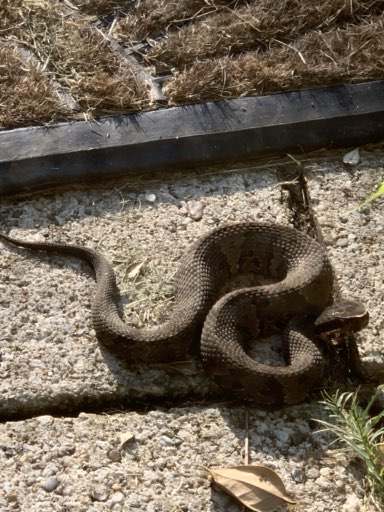 Florida
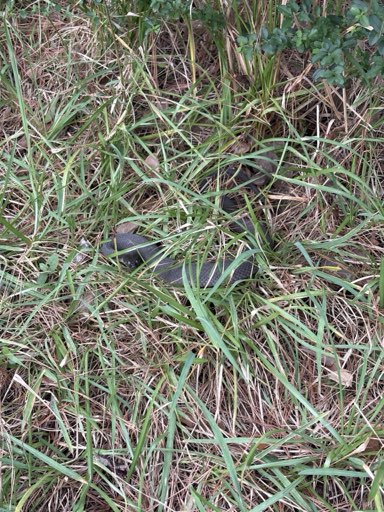 Texas
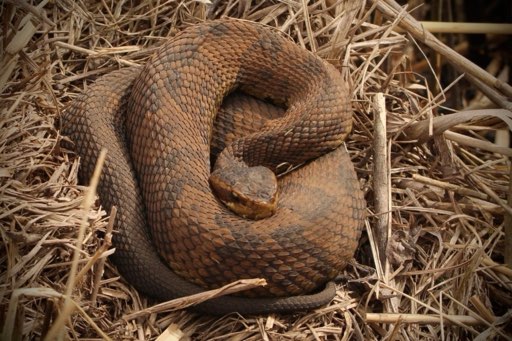 Tennessee
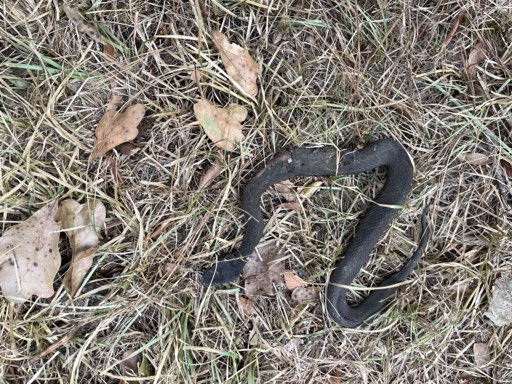 Texas
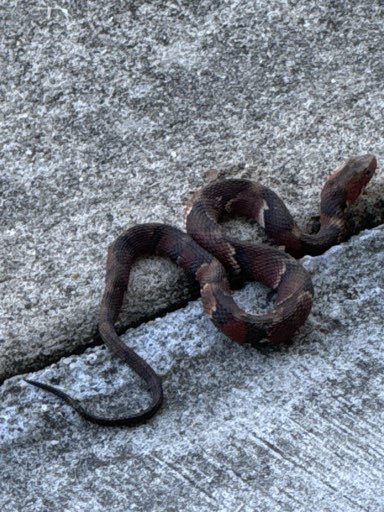 Louisiana
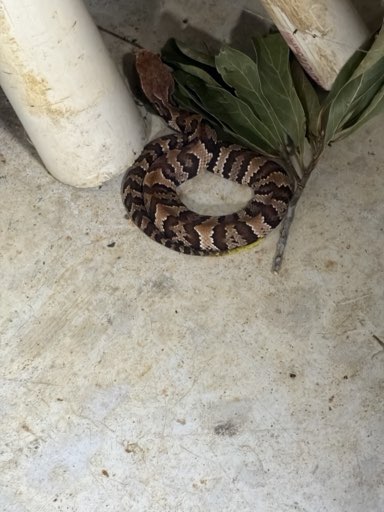 Alabama
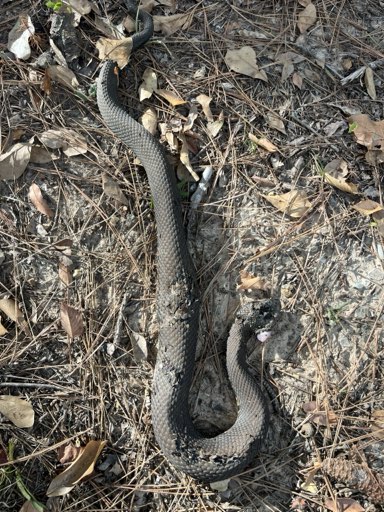 Texas
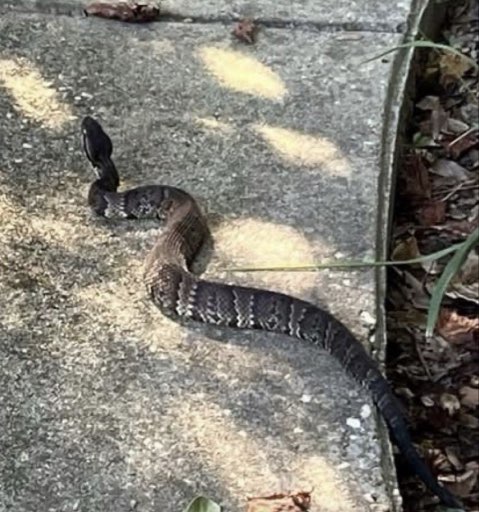 Alabama
SlitherID identifies snakes from a photo and shows if they are venomous. For iPhone.

Questions and answers
How can I tell a cottonmouth from a water snake in the water?
Are cottonmouths aggressive?
Is a water moccasin the same as a cottonmouth?
Other venomous snakes
-
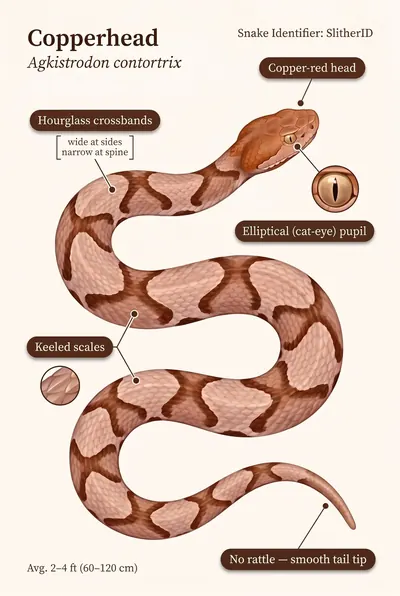 CopperheadAgkistrodon contortrix
-
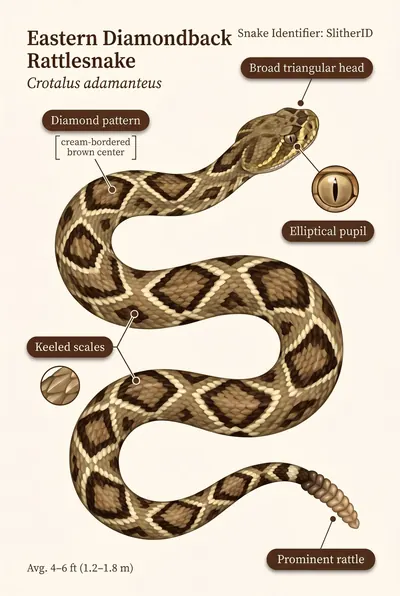 Eastern Diamondback RattlesnakeCrotalus adamanteus
-
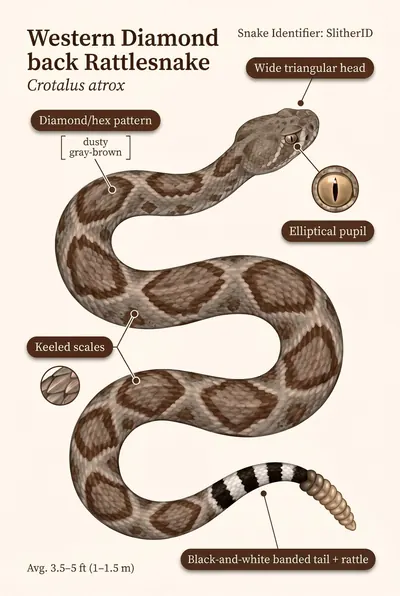 Western Diamondback RattlesnakeCrotalus atrox
-
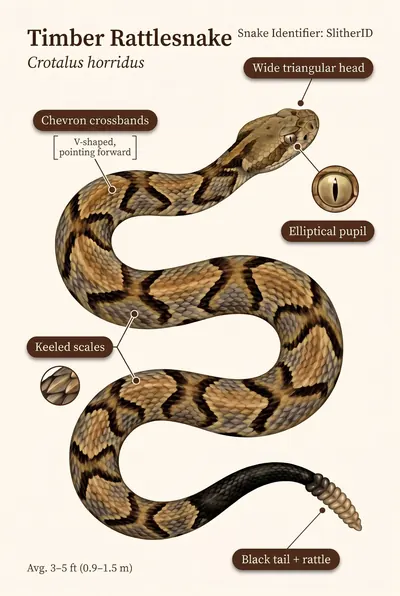 Timber RattlesnakeCrotalus horridus
-
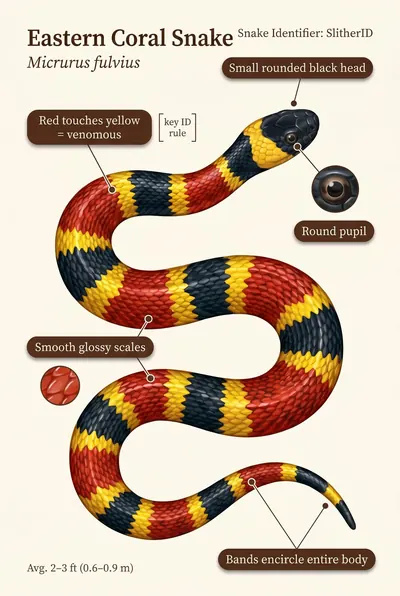 Eastern Coral SnakeMicrurus fulvius
-
 Texas Coral SnakeMicrurus tener
All 19 venomous snakes → · Venomous snake identification chart (US) →